The Sinclair C5: Sir Clive’s battery tricycle, and the most famous flop of 1985.
In January 1985 the man behind the ZX Spectrum launched a one-seat electric tricycle you could drive at 14 without a licence. It was meant to be the start of a new kind of motoring. Within ten months the company was in receivership. Here is why it had pedals, how it worked, what the lorry tests found, what happened to the unsold stock, and which of the famous stories hold up, with every fact linked to its source.
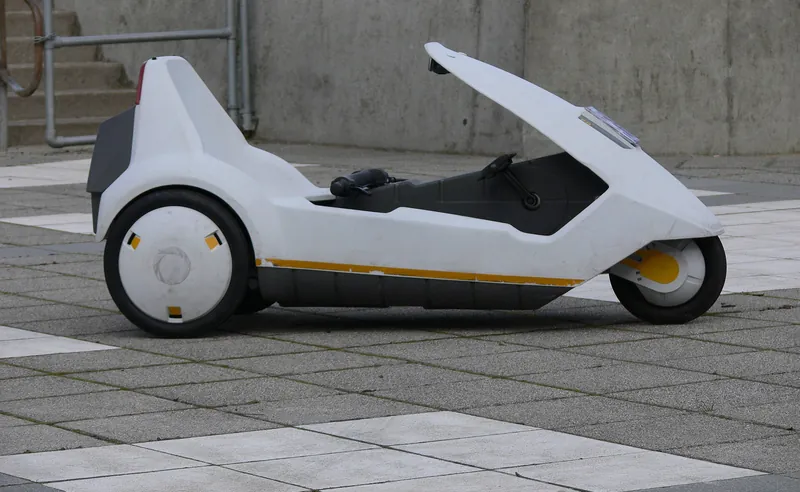
The Sinclair C5 of 1985, not the Citroën C5. This site is about Sir Clive Sinclair’s small electric tricycle. If you were looking for the Citroën C5, the French family car, it shares nothing with this one except two characters of its name.
Nor is the C5 a car in the ordinary sense. Under a new 1983 law it counted as an ‘electrically assisted cycle’, so anyone aged 14 or over could drive it without a licence, road tax, compulsory insurance or a helmet. Sinclair press kit, 1985 At the launch Sir Clive began by saying what he was not announcing: a conventional car. The C5, he said, was ‘the first stage on the road to an electric car’. Adamson and Kennedy Sinclair’s planned C10 and C15 appear here only briefly, in what happened next, and the wider history of electric cars only as background. It is not a buyer’s guide: for a particular machine, ask an owners’ group.
The short version
Sinclair Vehicles launched the C5 on 10 January 1985, priced at £399 including VAT, plus £29 for packing and delivery. Sinclair press kit, 1985
The launch was held in the Pavilion, a temporary hall in the East Court car park at Alexandra Palace in north London, put up while the palace was rebuilt after its 1980 fire. Alexandra Palace Six C5s burst out of cardboard boxes, driven by models round a purpose-built indoor track. Alexandra Palace
The 1983 Regulations let a tricycle count as a pedal cycle if it weighed no more than 60 kg, had pedals that could propel it, and had no motor except an electric one of no more than 0.25 kW that could not drive it above 15 mph. 1983 Regulations
The press kit said the C5 was designed by Sinclair and developed and tested by Lotus Cars. Sinclair press kit, 1985 It was built under subcontract at Hoover’s plant in Merthyr Tydfil, South Wales, where production had begun in early November 1984. Sinclair press kit, 1985
Sinclair expected to build ‘well in excess of 100,000’ C5s in 1985, creating about 200 jobs. Sinclair press kit, 1985 BBC Radio 5 Live says Sir Clive originally hoped to sell a million a year. BBC Radio 5 Live
In the second week of August 1985 Hoover publicly stopped all work on the C5, saying it had run out of key parts and would plan no more until its differences with Sir Clive were settled. Adamson and Kennedy
Sinclair Vehicles, renamed TPD Ltd the month before, was placed in receivership on Friday 12 October 1985, owing about £700,000 to 110 suppliers. Adamson and Kennedy
The Guardian’s obituary of Sir Clive says his reputation ‘came a cropper’ with the C5, which sank under ‘gales of derisive media laughter’. The Guardian, 2021
Today a small band of enthusiasts repairs and recommissions the C5s that survive. Hagerty UK, 2021
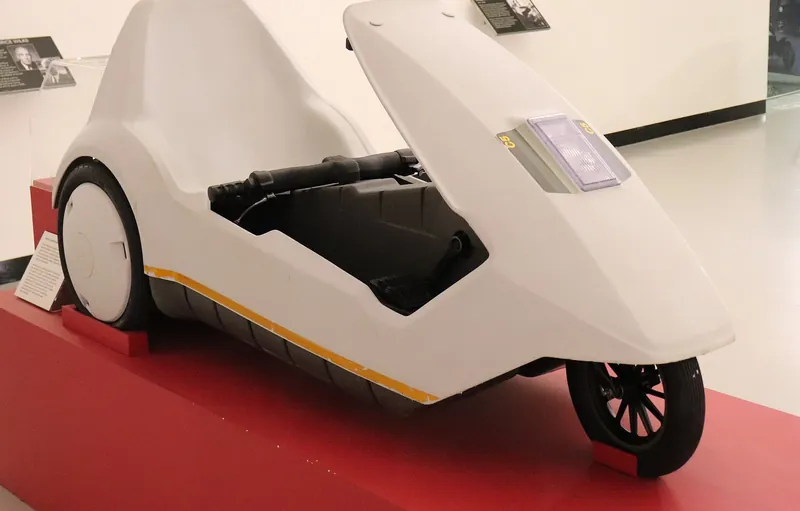
Explore the story
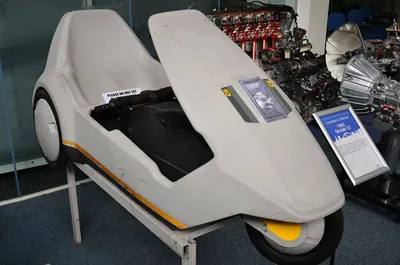 The storyA computer fortune, a 1983 law and a tricycle built in a washing machine factory.
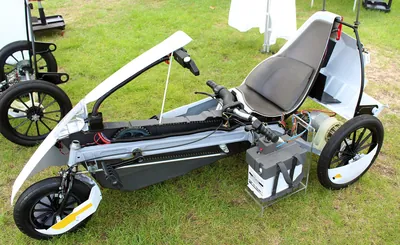 How it workedPedals, a 250-watt motor, a lead-acid battery and a polypropylene shell.
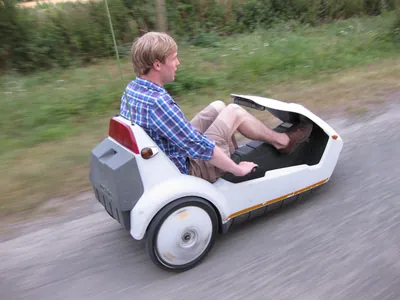 On the roadLaunch day in the snow, the lorry tests and the critics.
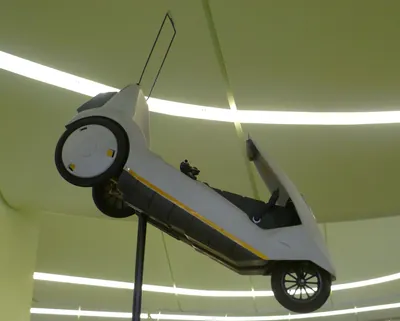 What happenedReceivership, thousands of unsold C5s and a long afterlife.
Tile pictures are credited on their pages and on the credits page.