Receivership, unsold stock and a long afterlife
Production was cut within three months, Hoover stopped in August and the company was in receivership in October. The C5s themselves were sold off for years, and many are still running.
The Sinclair C5 tricycle, not the Citroën C5. This site is about Sir Clive Sinclair’s battery-assisted tricycle of 1985. See the home page for what it leaves out.
Into the shops
From 1 March 1985 it went on sale in Woolworth and Comet stores; Comet took a launch stock of 1,600. Adamson and Kennedy
Full-scale production was halted on 29 March 1985, under three months after the launch, and resumed at only 10 per cent of the original rate. Hagerty UK, 2021
Adamson and Kennedy say production stopped for three weeks to deal with complaints about a plastic moulding on the gearbox, and the 100 Hoover workers on the C5 were moved to refitting stock. Adamson and Kennedy They put the cut at 95 per cent when work restarted in April, with Hoover making about 100 a week. Adamson and Kennedy
How hard was production cut? Sources differ
- Full-scale production was halted on 29 March 1985, under three months after the launch, and resumed at only 10 per cent of the original rate. Hagerty UK, 2021
- They put the cut at 95 per cent when work restarted in April, with Hoover making about 100 a week. Adamson and Kennedy
Ten per cent of the planned rate and a 95 per cent cut are close; both describe a factory running at a small fraction of what was planned.
In May 1985 Sinclair admitted that 6,000 were unsold, twice the figure previously disclosed. Adamson and Kennedy
The Netherlands
A Dutch transport authority ruled that the C5 was not suitable for Dutch roads in its present form, asking for better brakes, more reflectors and the mast as standard. Adamson and Kennedy
Planet Sinclair’s summary says it was banned outright in the Netherlands. Planet Sinclair
Yet by 1996 many resold C5s had gone to the Netherlands, where they suited the flat cycle paths. The Independent, 1996
Hoover pulls out
In July Hoover drew up a writ against Sir Clive personally for £1,525,000 for C5 work since November 1984, plus interest, but never served it. Adamson and Kennedy
By then Sir Clive had turned down an offer of £2.7 million for the company. Adamson and Kennedy
In the second week of August 1985 Hoover publicly stopped all work on the C5, saying it had run out of key parts and would plan no more until its differences with Sir Clive were settled. Adamson and Kennedy
The Welsh royal commission says about 12,000 C5s had been assembled at Merthyr when production ended in August 1985, with Hoover owed around £1.5 million. RCAHMW
Sinclair User reported that the money dispute was settled, but with so much stock still unsold there were no plans to restart production. Sinclair User, 1985
Receivership
Sinclair Vehicles, renamed TPD Ltd the month before, was placed in receivership on Friday 12 October 1985, owing about £700,000 to 110 suppliers. Adamson and Kennedy
It named the receivers as David Sapte and Anthony Locke of Begbies. Sinclair User, 1985
A separate company, Sinclair Vehicles Sales Ltd, carried on taking orders. Sinclair User, 1985
TPD went into voluntary liquidation on 4 November 1985. Adamson and Kennedy
Shareholders heard that on top of the £8.6 million, Sir Clive had lent £5.9 million, secured by debenture; 4,500 unsold C5s were still in TPD’s hands, and the deficit was about £6.4 million. Adamson and Kennedy
Sinclair Research’s spokeswoman put Sir Clive’s investment in the company at £7 million. Sinclair User, 1985
How much did Sir Clive put in? Sources differ
- In March 1983 Sir Clive sold some of his shares in Sinclair Research, raising £12 million, and formed a new company, Sinclair Vehicles. Hagerty UK, 2021
- Adamson and Kennedy say the new company started with £8.6 million of the money from the share sale. Adamson and Kennedy
- Sinclair Research’s spokeswoman put Sir Clive’s investment in the company at £7 million. Sinclair User, 1985
- Shareholders heard that on top of the £8.6 million, Sir Clive had lent £5.9 million, secured by debenture; 4,500 unsold C5s were still in TPD’s hands, and the deficit was about £6.4 million. Adamson and Kennedy
The £12 million was raised from the share sale, not all spent on the C5. The other figures measure different things at different times: start-up capital, a spokeswoman’s round number and the liquidation accounts with Sir Clive’s loans on top.
What happened to the unsold C5s
Nine months later both chains were still holding most of their orders and cut the price by 65 per cent. Adamson and Kennedy
In some big stores a C5 with a full set of accessories could be had for £139.99. Adamson and Kennedy
Many unsold C5s were eventually sold for less than a fifth of the original price. Hagerty UK, 2021
In 1996 Maurice Levensohn announced that he had sold nearly 7,000 C5s, at up to £700 each, which he had bought after the venture collapsed. The Independent, 1996
Yet by 1996 many resold C5s had gone to the Netherlands, where they suited the flat cycle paths. The Independent, 1996
How many were made and sold?
Built and sold: sources differ
- Its catalogue says 14,000 were produced at Merthyr but only 4,500 were ever sold. Science Museum Group
- The Welsh royal commission says about 12,000 C5s had been assembled at Merthyr when production ended in August 1985, with Hoover owed around £1.5 million. RCAHMW
- Sam Rowell, who runs the C5 Depot specialist, estimates around 15,000 were built; he owns about 62. Hagerty UK, 2025
- The National Motor Museum says fewer than 9,000 had been sold by the end of 1985. National Motor Museum
- BBC Radio 5 Live says 17,000 were bought before the company went into receivership. BBC Radio 5 Live
- Planet Sinclair says fewer than 17,000 were sold. Planet Sinclair
- The Guardian’s obituary says only a few thousand were ever sold. The Guardian, 2021
We have not found Sinclair’s own production records, so treat every total as an estimate. The figures for C5s “sold” also mix different things: sales by Sinclair before the collapse, and the thousands sold off later by the receivers and dealers. If around 12,000 to 15,000 were built, the higher sales figures must count those later sales.
The C10 and C15
The planned C10, an enclosed two-seater, and the four-seat C15, each with a range of about 40 miles, were delayed; the C15 had already been in a wind tunnel. Sinclair User, 1985
In February 1985 Sir Clive had talked of selling the C15 by 1990 as an electric four-seater capable of up to 80 mph. Adamson and Kennedy
Neither went on sale.
Sir Clive after the C5
Within months Sir Clive was forced to sell his computer company to Amstrad. The Guardian, 2021
Sir Clive tried again with the Zike electric bike, launched in August 1992; by May 1993 its makers had announced they were stopping production. The Independent, 1996 c5owners.com says about 2,000 Zikes were sold. c5owners.com
A Sinclair X-1, said in 2011 to be going on sale at £595, never appeared, according to c5owners.com. c5owners.com
In 2010 he told the Independent on Sunday: ‘I rushed at it too much.’ The Guardian, 2021
Sir Clive Sinclair died in September 2021, aged 81. The Guardian, 2021
Hoover’s Merthyr factory closed in 2009, after 61 years. RCAHMW
Where to see one
The Science Museum Group holds two C5s, both made in Merthyr Tydfil in 1985; one was a gift from Manchester Business School. Science Museum Group
Museum Wales bought its C5, number 2250, in December 1986. Museum Wales It is on display at the National Waterfront Museum in Swansea. RCAHMW
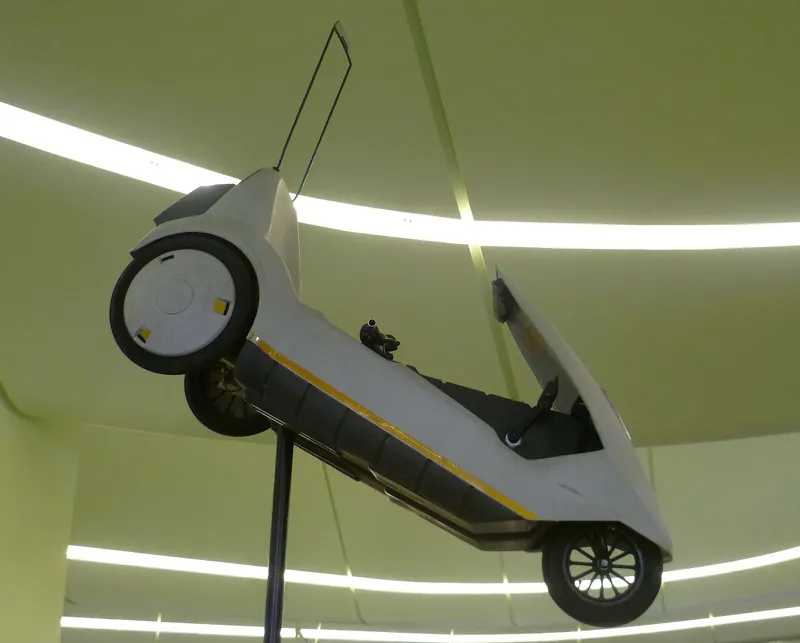
The photographs on this site also show C5s at the British Motor Museum in Gaydon, the Coventry Transport Museum and the Riverside Museum in Glasgow. Check with any museum before visiting, as displays change.
Its plastic body panels have weathered the decades better than most steel cars. BBC Future
Owners today
Today a small band of enthusiasts repairs and recommissions the C5s that survive. Hagerty UK, 2021
In 2021 Hagerty counted a Facebook group of nearly 1,700 members and a website on repair and upkeep, including 3D-printed replacement parts. Hagerty UK, 2021
Sam Rowell, who runs the C5 Depot specialist, estimates around 15,000 were built; he owns about 62. Hagerty UK, 2025
Rowell points out they are still road legal: you just have to be 14, with no helmet, tax or insurance needed. Hagerty UK, 2025
In 2014 a fully working C5 cost around £650 on eBay. BBC Future
Buyers included Elton John and the magician Paul Daniels. Hagerty UK, 2025
In January 2025 owners, designers and former company staff returned to the exact spot of the launch to mark 40 years. Alexandra Palace
In 2025 the Festival of the Unexceptional marked the 40th anniversary with a C5 display. Hagerty UK, 2025
The name it got
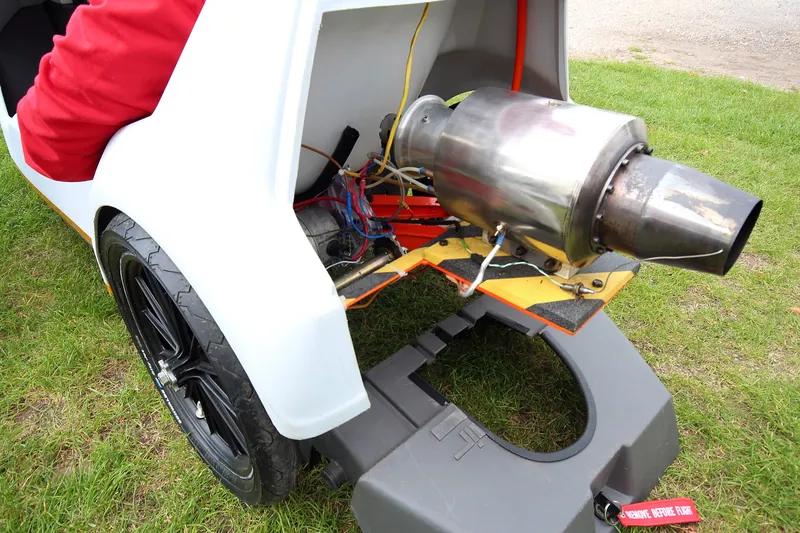
It picked up nicknames including the Doodle-buggy, Hoover Hedgehog, Skinny Mini and Voltswagen. RCAHMW
It has even been named the worst gadget of all time, ahead of Betamax videos and pizza scissors. BBC Future
The Guardian’s obituary of Sir Clive says his reputation ‘came a cropper’ with the C5, which sank under ‘gales of derisive media laughter’. The Guardian, 2021
For another forgotten machine with a long afterlife, see what happened to the Variomatic on daf-variomatic.motoring.im.
Timeline
- 1 March 1985 From 1 March 1985 it went on sale in Woolworth and Comet stores; Comet took a launch stock of 1,600. Adamson and Kennedy
- 29 March 1985 Full-scale production was halted on 29 March 1985, under three months after the launch, and resumed at only 10 per cent of the original rate. Hagerty UK, 2021
- May 1985 In May 1985 Sinclair admitted that 6,000 were unsold, twice the figure previously disclosed. Adamson and Kennedy
- July 1985 In July Hoover drew up a writ against Sir Clive personally for £1,525,000 for C5 work since November 1984, plus interest, but never served it. Adamson and Kennedy
- August 1985 In the second week of August 1985 Hoover publicly stopped all work on the C5, saying it had run out of key parts and would plan no more until its differences with Sir Clive were settled. Adamson and Kennedy
- 12 October 1985 Sinclair Vehicles, renamed TPD Ltd the month before, was placed in receivership on Friday 12 October 1985, owing about £700,000 to 110 suppliers. Adamson and Kennedy
- 4 November 1985 TPD went into voluntary liquidation on 4 November 1985. Adamson and Kennedy
- August 1992 Sir Clive tried again with the Zike electric bike, launched in August 1992; by May 1993 its makers had announced they were stopping production. The Independent, 1996
- 1996 In 1996 Maurice Levensohn announced that he had sold nearly 7,000 C5s, at up to £700 each, which he had bought after the venture collapsed. The Independent, 1996
- 2009 Hoover’s Merthyr factory closed in 2009, after 61 years. RCAHMW
- September 2021 Sir Clive Sinclair died in September 2021, aged 81. The Guardian, 2021
- January 2025 In January 2025 owners, designers and former company staff returned to the exact spot of the launch to mark 40 years. Alexandra Palace
Next: myths vs facts →