Pedals, a small motor and a big battery
Everything about the C5 was shaped by the 1983 rules: a light machine, a small electric motor, pedals that could move it, and no power above 15 mph.
The Sinclair C5 tricycle, not the Citroën C5. This site is about Sir Clive Sinclair’s battery-assisted tricycle of 1985. See the home page for what it leaves out.
Why it had pedals
The launch notes spelled out the limits: power-assisted speed capped at 15 mph, and weight at 60 kg. Sinclair press kit, 1985
There were no foot controls. The pedals were there because the law required them; they could add range and get the driver home with a flat battery. Sinclair press kit, 1985
A chain linked the pedals to the driven axle at one fixed ratio, about 3 metres of travel for every full turn of the pedals. Sinclair press kit, 1985
Sinclair User found that on a dry, level start a couple of turns of the pedals were enough before the motor cut in, but pedalling was needed on steep hills. Sinclair User, March 1985
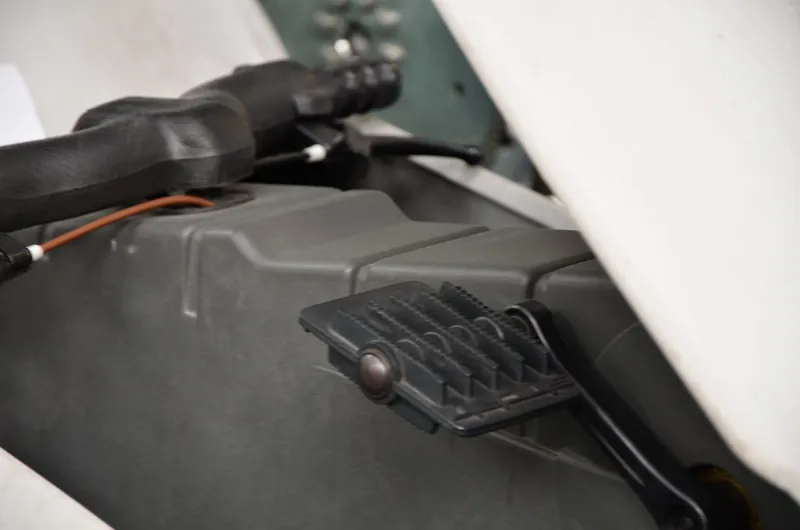
The motor
The motor came from Polymotor, an Italian subsidiary of Philips, which the press kit said made motors for aircraft and marine uses, including gyros and torpedoes. Sinclair press kit, 1985
Your Computer magazine described a 250-watt motor driving one rear wheel, and found it could not climb even gentle slopes without pedalling. Adamson and Kennedy Hagerty calls it a third-of-a-horsepower motor. Hagerty UK, 2021
It also says the motor was first meant to drive the cooling fan of a heavy lorry. Hagerty UK, 2025
Where the motor came from is the C5’s most repeated story. We set out every version on the myths page.
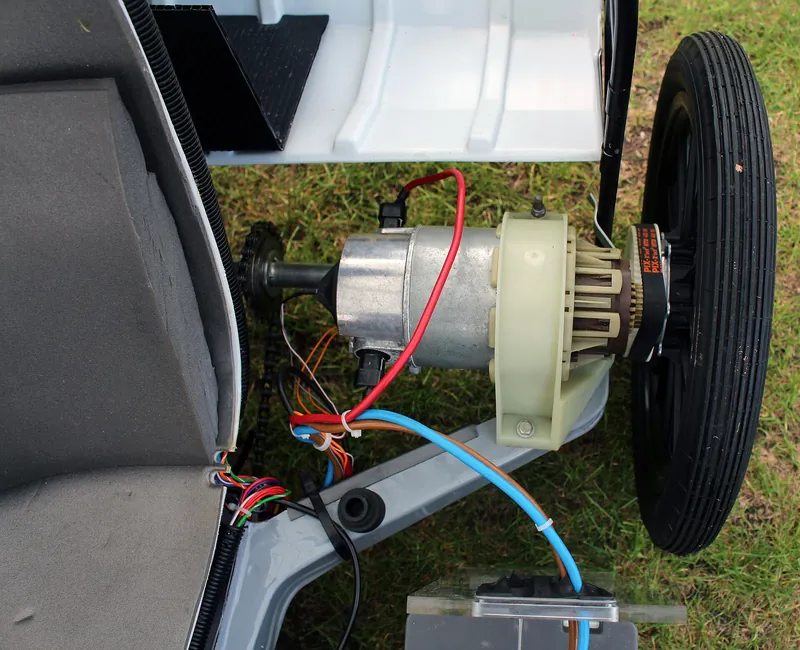
From motor to wheel
Drive went through an epicyclic reduction gearbox made by Mikron UK, with glass-reinforced nylon gears, then by toothed belt to a Torrington-made rear axle. Only one rear wheel was driven. Sinclair press kit, 1985
Hagerty says Lotus provided the gearbox and rear axle, reworking designs for a steering column from one of its cars. Hagerty UK, 2025
Who made the gearbox and axle? Sources differ
- Drive went through an epicyclic reduction gearbox made by Mikron UK, with glass-reinforced nylon gears, then by toothed belt to a Torrington-made rear axle. Only one rear wheel was driven. Sinclair press kit, 1985
- Hagerty says Lotus provided the gearbox and rear axle, reworking designs for a steering column from one of its cars. Hagerty UK, 2025
These need not clash: Lotus could have designed parts that outside suppliers then made. We have not seen a parts list that settles it.
There was no regenerative braking: with the motor off, the C5 simply freewheeled. Sinclair press kit, 1985
A circuit board by AB Electronics, built round a custom Ferranti chip, protected the motor from overheating and cut the drive if it drew very high currents for too long. Sinclair press kit, 1985
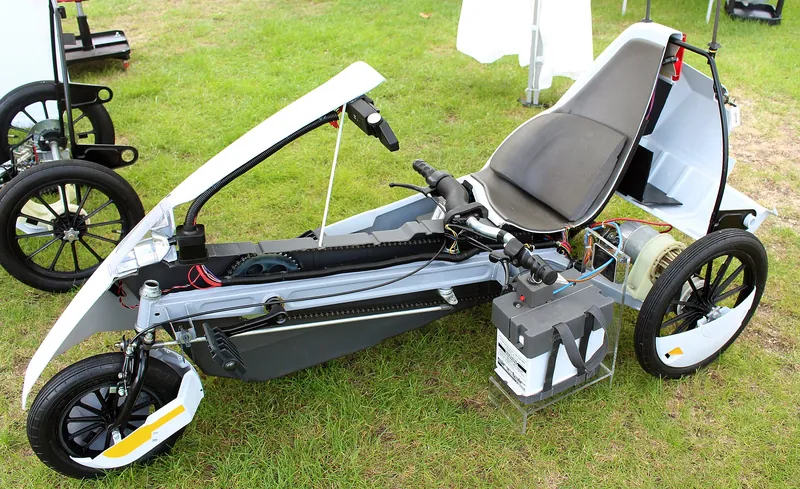
The battery
The battery, developed with Oldham, was a lightweight lead-acid unit of 15 kg and 35 Ah, designed to survive being run down hard again and again. Sinclair press kit, 1985
The owners’ site c5owners.com gives it as a 12 V, 36 Ah battery. c5owners.com
It was meant to last at least 300 severe deep discharges, and its maker guaranteed it for 12 months. Sinclair press kit, 1985
Recharging from the mains took about eight hours. Sinclair User, March 1985
Sinclair’s spokesman said the battery lost 8 to 10 per cent of its efficiency at zero degrees, and more below freezing. Sinclair User, March 1985
Sinclair advised a ‘push and coast’ technique: a burst of power, then a coast, then another burst. Sinclair User, March 1985
How far on a charge?
Sinclair claimed a range of up to 20 miles, or 40 miles with an optional second battery. Sinclair press kit, 1985
What was the range? Sources differ
- Sinclair claimed a range of up to 20 miles, or 40 miles with an optional second battery. Sinclair press kit, 1985
- The National Motor Museum gives 24 miles on one charge, or 40 with two batteries. National Motor Museum
- BBC Future gives 18.7 miles (30 km). BBC Future
- The Guardian’s 1985 report said the battery could give out after anything from 11 to 25 miles. The Guardian, 1985
- The AA’s test on its usual suburban course gave a typical range of ten miles, about half the claim; on a cold day in poor conditions the battery went flat after 6.5 miles. Adamson and Kennedy
The makers’ and museums’ figures are best cases. The AA’s figure comes from a real test route, and its cold-day result shows how much the weather mattered.
The AA recorded a top running speed of 12.5 mph. Adamson and Kennedy
The government’s road research laboratory found it was in effect a one-speed machine under power, at about 20 km/h. TRRL report, 1985
So a C5 was legally limited to 15 mph under power, but the testers found it ran at well under that.
Cheap to run
Sinclair claimed 1,000 miles of running for the price of a gallon of petrol. Sinclair press kit, 1985
The AA put a year’s running at about £19 to £22, allowing for battery replacement, against £19.25 for a £390 Honda moped. Adamson and Kennedy
Body and chassis
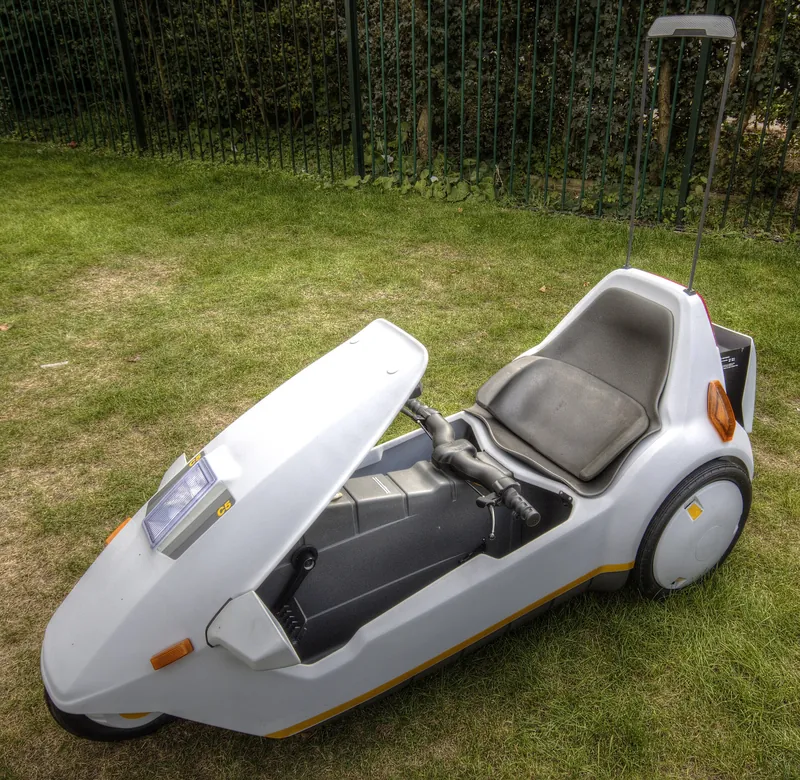
The body was two large polypropylene mouldings by Linpac, from ICI material, welded together by passing a current through conductive tape at the joint. Sinclair called it the largest mass-produced polypropylene moulded assembly ever made. Sinclair press kit, 1985
Underneath was a steel backbone chassis developed with Lotus, which also worked on the steering geometry, frame flex and tyres. Sinclair press kit, 1985
The wheels were moulded in glass-reinforced nylon, with 16-inch rear wheels, and the turning circle was about two-thirds of an Austin Mini’s. Sinclair press kit, 1985
Hoover painted the frame inside and out to an appliance-shell standard, and it passed a 96-hour salt spray test. Sinclair press kit, 1985
Most of the main parts were British: the battery by Oldham, the body mouldings by Linpac and the electronics by AB Automotive Electronics. Sinclair press kit, 1985
Lotus ran durability tests on rigs and its own test tracks, with work at MIRA, British Aerospace and the Prescott hill climb. Sinclair press kit, 1985
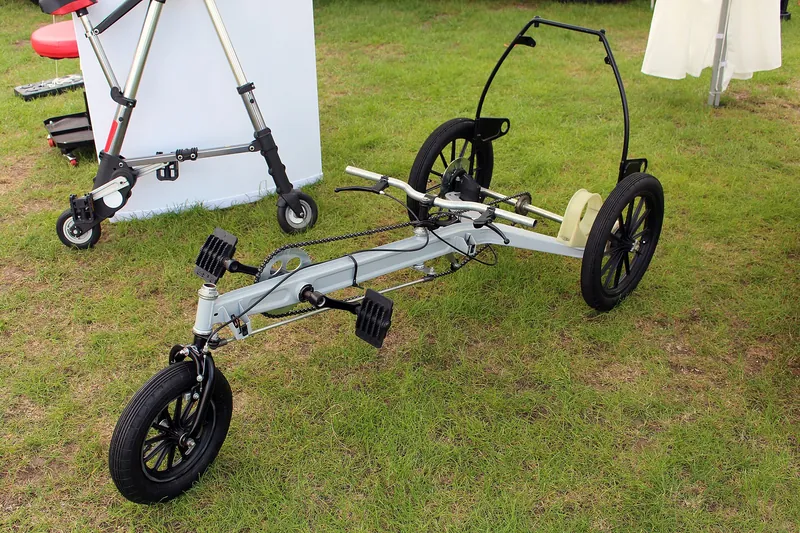
In the cockpit
You steered with a bar running beside the seat, linked to the front fork. A push-switch on the left gave power, and cycle-style levers braked the front wheel and the undriven rear wheel. Sinclair press kit, 1985
The handlebars sat beneath the driver’s thighs, and there was no reverse gear. Sinclair User, March 1985
Sinclair said the average driver’s eye level was the same as in an Austin Mini. Sinclair press kit, 1985
Lamps, reflectors all round and a key-operated ignition switch were standard, and small LED displays monitored the motor, the load and the battery. Sinclair press kit, 1985
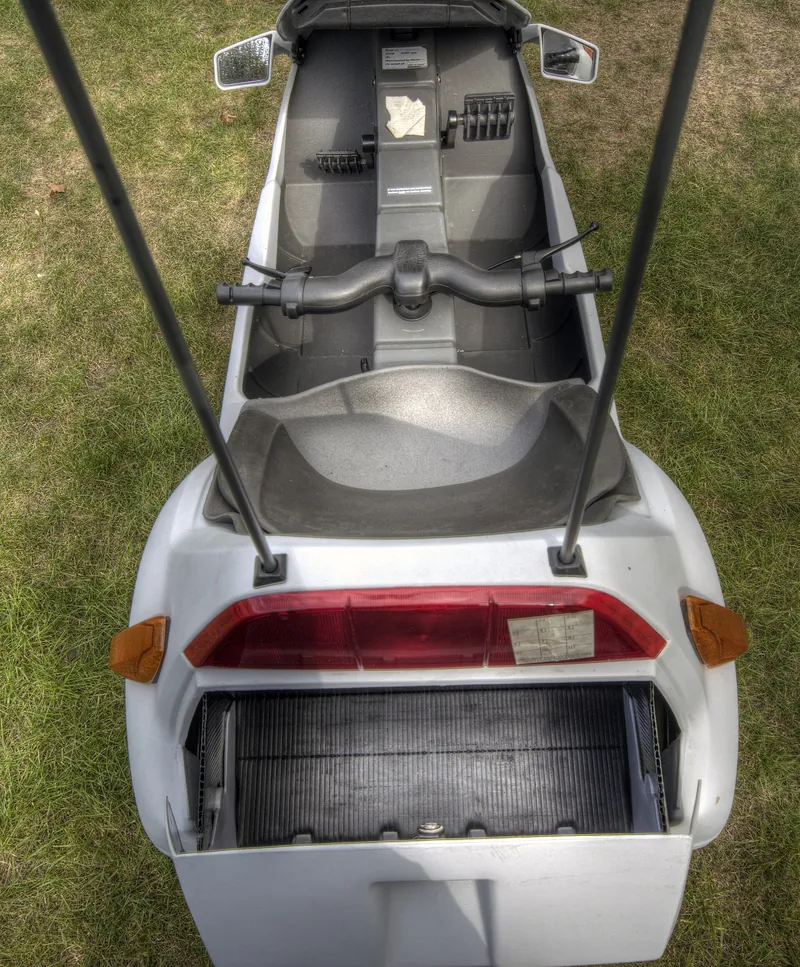
How big, how heavy?
The magazine measured it at 2 ft 6 in wide, 2 ft 6 in high and 6 ft 6 in long, with a boot of one cubic foot. Sinclair User, March 1985
They could not squeeze an executive briefcase into the boot. Sinclair User, March 1985
The Guardian gave it as under six feet long and 2 ft 7 in high. The Guardian, 1985
How heavy was it? Sources differ
- Sinclair User put its weight at 99 lb (about 45 kg), including a 33 lb battery. Sinclair User, March 1985
- The Guardian gave a basic weight of 66 lb (about 30 kg). The Guardian, 1985
- The Science Museum Group lists its first C5 at 44 kg. Science Museum Group
- Its second C5, catalogued with wood and textile among its materials, is listed at 79 kg. Science Museum Group
- Museum Wales lists its C5 at 30 kg. Museum Wales
Some figures probably include the 15 kg battery and some do not, and museum examples carry different accessories. The legal limit for an assisted tricycle was 60 kg.
Extras
Mirrors, indicators, a horn, seat cushions and weather gear were extras. Sinclair press kit, 1985
A rear ‘high-visibility mast’ was offered as an accessory. Sinclair press kit, 1985 Planet Sinclair says pressure from RoSPA and the press later forced Sinclair to include the mast. Planet Sinclair
With the extras RoSPA called essential, plus insurance, a spare battery and delivery, Sinclair User put the real cost at about £600; the extras alone were £143. Sinclair User, March 1985
The C5 was far from the first battery vehicle: history.motoring.im explains how electric cars came early, and engines.motoring.im covers hybrids and electric cars today. For another odd three-wheeler, see the Dymaxion car.